How Do You Speedrun From Bronze to Unreal in Fortnite Reload?
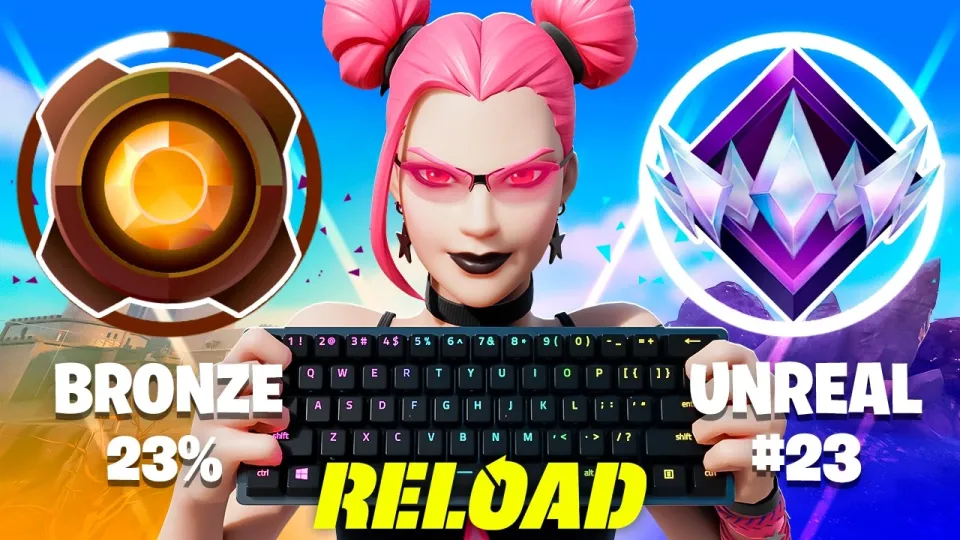
Video: BRONZE To UNREAL Ranked Speedrun In Fortnite Reload!
Need articles like this for your video? They help promote it on YouTube and Google — order them in the Telegram bot @sat_sit_bot. It writes articles around your video, embeds the video and publishes them on popular niche websites (no ads). Try it free: 50 articles on us.
· based on the channel HaloBT
Key takeaways
- Fortnite Reload is a faster, respawn-based mode, so a bronze-to-unreal climb there moves quicker than in standard Battle Royale ranked.
- The ladder runs Bronze, Silver, Gold, Platinum, Diamond, Elite, Champion, and Unreal, with Gold and Diamond acting as the hardest filters.
- Placement points plus eliminations drive progress; consistent top finishes matter more than highlight-reel kill games.
- Solo and duo-fill climbs demand different pacing: solos reward survival, fills reward coordinated early fights.
- HaloBT documented the full run in a single video and shares practice maps under the Epic handle MoreHaloBT.
A bronze-to-unreal speedrun in Fortnite Reload is a ranked climb that starts at the bottom of the ladder and pushes to Unreal as fast as possible, and the Reload playlist is the fastest place to do it because respawns and shorter matches compress the grind. The core method is simple: bank placement points every game, take smart early fights, and never let a single bad drop turn into a zero-point session. HaloBT built a practice map for exactly this kind of mechanical work, and you can find it plus future updates at HaloBT's Fortnite creator page.
What makes Fortnite Reload the fastest ranked ladder to climb
Fortnite Reload is a condensed Battle Royale variant with respawns, smaller lobbies, and faster circles, and that structure is what makes a bronze-to-unreal push realistic in a single sitting rather than a multi-week project. In standard ranked, a bad drop often means a long walk back to the lobby and a lost point cushion. In Reload, dying early costs you a respawn timer, not your whole match, so aggressive players can keep fighting and keep earning elimination points.
The trade-off is that everyone in the lobby has the same idea. Reload lobbies are famously stacked with players chasing kills, so the climb rewards the people who can win a 50/50 off spawn and then reset. If your mechanics are shaky, the mode will expose it quickly, which is why so many speedrunners warm up on aim and edit courses before queueing.
The rank ladder and where the climb actually gets hard
Ranked progression in Fortnite runs through Bronze, Silver, Gold, Platinum, Diamond, Elite, Champion, and finally Unreal, and each tier has its own internal divisions before you promote. The early tiers are forgiving: Bronze through Silver mostly require you to play games and finish reasonably, so a skilled player clears them in a handful of matches.
Gold is the first real wall, and Diamond is the second. At those tiers the lobby skill jumps noticeably, and the points required per division climb. Comments under the run call Gold out specifically as feeling like a tournament final, and that matches how the ladder behaves: at Gold you start meeting players who can build, edit, and hit shots under pressure, so pure aggression stops paying. The fix is to trade fewer fights and protect your placement points while still taking free eliminations when the circle hands them to you.
A practical step-by-step route from Bronze to Unreal
A reliable speedrun route is a repeatable process rather than a lucky streak, and it works in both solos and fills. Follow it in order and adjust only when the lobby forces you to.
- Pick one drop and learn it cold. Choose a POI with dense loot and short rotations, then land there every game until you know every chest, every angle, and every exit.
- Take one early fight, not five. In Reload the respawn system tempts you into endless brawls; one clean elimination plus survival is worth more than a chaotic four-kill start that ends in a wipe.
- Play the circle, not the kill feed. Rotate early, hold high ground, and let other players eliminate each other while you bank placement points.
- Convert endgames. The final few players in Reload are usually the ones who also played patient, so have a plan for the last zone: mats, heals, and a clear win condition.
- Review the losses. One lost fight per session is a lesson; the same lost fight five times is a habit. Watch the replay, fix the mistake, requeue.
Solo queue versus duo fills in a Reload speedrun
Solo queue and duo fills test different skills, and a bronze-to-unreal speedrun can use either depending on how much control you want over your own fate. Solos are the purest measure: every point is yours, every mistake is yours, and there is no teammate to coordinate with or blame. The downside is that a single bad drop is entirely on you, and there is no one to revive you in the moments where Reload's respawn system does not save you.
Duo fills add variance. A good random partner doubles your fight power and can carry a rough early game; a bad one feeds the lobby and drags your placement down. The compromise most speedrunners use is to queue fills, play support early, and take over the endgame themselves once the partner is eliminated. If you are grinding purely for the Unreal badge, solos are the more predictable route.
Common problems players hit on the climb
Most stalled climbs come down to a small set of repeatable problems, and each has a direct fix. Recognizing them early saves hours of lost points.
- Improvement plateaus after switching input. Players who move to keyboard and mouse often see fast early gains and then a flat line. The cause is usually unlearning old habits, not a lack of talent; short, focused aim and edit drills beat long unfocused sessions.
- Console and controller limits. Controller players on console face frame and input constraints, but the ranked ladder is not closed to them. Sensitivity tuning and consistent build binds matter more than raw hardware.
- Rank anxiety at Gold and Diamond. The jump in lobby skill feels like a wall, but it is usually a pacing problem: too many fights, too little patience.
- Chasing clips instead of points. A highlight elimination is worth less than a top-five finish in a speedrun. Points are the only metric that moves the rank bar.
Practice tools that shorten the grind
Mechanics work is the highest-leverage investment in any Fortnite ranked climb, and dedicated practice maps compress weeks of learning into hours. HaloBT publishes competitive practice builds through the Fortnite creator program, including an aim, edit, and piece-control map designed for exactly the warm-up routine a speedrun needs. You can browse the maps and follow for updates at https://www.fortnite.com/@MoreHaloBT.
A short daily routine beats a long weekly one: ten minutes of aim tracking, ten minutes of editing through walls and ramps, then straight into ranked while your hands are warm. Players who warm up before queueing consistently report cleaner early fights, which is where most Reload points are won or lost.
Useful links
- Fortnite creator page and practice maps: https://www.fortnite.com/@MoreHaloBT
- Community Discord: https://discord.com/invite/halobt
- Twitch streams: https://www.twitch.tv/halobt
- Twitter: https://twitter.com/halobombtrooper
- Instagram: https://www.instagram.com/therealhalobt
Final thoughts on the climb
A bronze-to-unreal run in Fortnite Reload is less about raw mechanical brilliance and more about discipline: one drop, one early fight, patient rotations, and consistent endgame conversion. The ladder's real gates are Gold and Diamond, where lobby skill spikes and aggression stops being enough on its own. HaloBT's full run is a useful reference because it shows the pace of the climb rather than only the highlight moments, and the practice maps linked above are the same kind of tool the run relies on. If you want to follow the next attempt or grab the maps before queueing, start at https://www.fortnite.com/@MoreHaloBT.
Source: BRONZE To UNREAL Ranked Speedrun In Fortnite Reload! · Markdown version
Questions & answers
How long does a bronze-to-unreal speedrun in Fortnite Reload usually take?
It depends on win rate and how many points you bank per session, but Reload's respawns and short matches make it far faster than standard ranked. Strong players clear Bronze through Platinum in a single sitting; Gold and Diamond are where most of the time goes.
Is it easier to reach Unreal in solos or in duo fills?
Solos are more predictable because every point and every mistake is yours, with no random teammate variance. Duo fills can be faster when you get a competent partner, but bad fills drag placement down, so most speedrunners prefer solos for a clean climb.
Why does Gold feel so much harder than Silver?
Gold is the first tier where the lobby consistently contains players who can build and edit under pressure, so pure aggression stops working. Protecting placement points and taking only free eliminations is the usual fix.
How do controller and console players keep up on the ranked ladder?
Sensitivity tuning, consistent build binds, and short daily aim and edit drills close most of the gap. Hardware limits exist, but disciplined warm-up routines and practice maps matter more than the input device itself.